
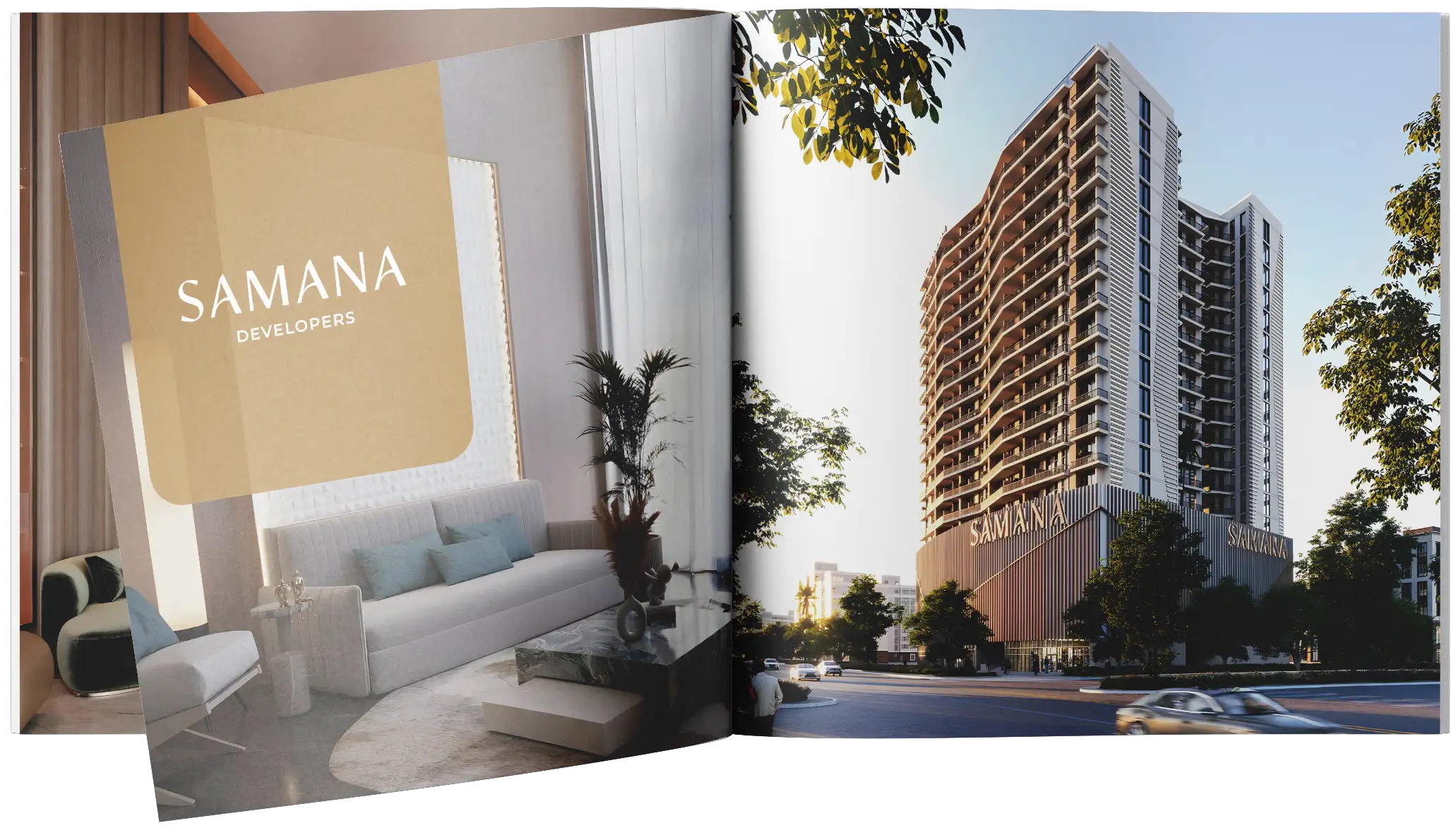
Within Dubai’s residential market, Al Warsan stands apart from more high-profile districts. It is not defined by waterfront settings, landmark views, or ultra-luxury branding. Instead, its appeal is rooted in practicality, with housing typically assessed according to layout efficiency, accessibility, nearby retail, and the ease of commuting to work, education, and everyday services. Samana Greenfield fits naturally within this environment as a new apartment development that prioritizes functionality and flexibility over visual spectacle.
This positioning is relevant because many buyers in this segment are not focused on prestige-led ownership. Their priority is a home or investment property that can perform consistently across different occupier profiles over time. Samana Developers has structured Samana Greenfield around that principle, offering a contemporary residential concept with more adaptable layouts than a typical suburban apartment building. This gives the project a clearer identity in a district where practical considerations strongly influence purchasing decisions.
The development includes 1-bedroom, 1-bedroom plus study, 2-bedroom, and 2-bedroom plus study apartments. Its core design concept allows homes to transition from 1 to 2 bedrooms and from 2 to 3 bedrooms. Current prices start from AED 900,000 (≈ $245,100) for a 1-bedroom apartment measuring 570 sqft (53.0 m²), while 2-bedroom units start from AED 1,300,000 (≈ $354,000) with 950 sqft (88.3 m²). Handover is scheduled for Q1 2029.
Buyers can choose between two extended payment plans. Under the PDC option, the structure is 5% on booking, 5% after one month, 5% in month four, followed by 1% monthly for 85 months. Under the non-PDC plan, the schedule is 5% on booking, 10% after one month, 5% in month four, and then 1% monthly for 80 months.
As a residential offering, Samana Greenfield is defined less by one standout feature than by the balance of its components. The flexibility of its apartment layouts is commercially relevant because it broadens the range of potential occupants. Homes that can adapt to changing household needs generally perform better in both rental and resale markets than rigid layouts with narrower use cases. This strengthens the project’s practical value and supports its position as a liveable mid-density residential development rather than a purely investor-led scheme.
The shared spaces are designed for regular, everyday use rather than purely for presentation. Family-oriented amenities such as a children’s play area, daycare centre, and multipurpose room create an environment that suits residents who expect to spend substantial time within the development. This reinforces its role as a full-time residential community, particularly in suburban areas where convenience and family retention are important.
Leisure amenities are centred on outdoor communal living. Features including adult and children’s pools, a jacuzzi, a pool deck, sunken seating, BBQ areas, and an outdoor cinema contribute to a social setting that supports relaxation and interaction. These amenities are integrated into daily life rather than treated as isolated additions, giving residents places to unwind and socialise without leaving the property. In a more spread-out urban setting, that is a practical advantage.
Fitness facilities follow the same functional approach, with both indoor and outdoor gyms available. This dual arrangement allows residents to choose between climate-controlled and open-air exercise environments. While this is not a headline feature, it reflects an understanding that residential developments in emerging or peripheral districts benefit from supporting everyday routines, including fitness.



Off-Plan 1-2 Bedroom
Apartments for Sale
at Warsan, Dubai
Samana Greenfield is a residential project by Samana Developers located in Warsan, Dubai, UAE. The development focuses on adaptable 1-2 bedroom apartment living with a calmer setting, swimming pools, cinema, fitness areas and family-oriented amenities.
20/80
Payment Plan
Q1 2029
Handover
AED 900,000
Starting Price
Samana Greenfield at Warsan, Dubai
Location in Dubai
Developer
Property Type
Available Units
Total Areas
Payment Plan
Completion
Photo Gallery
Renders may look slightly different than real life photos
Renders may look slightly different than real life photos
Floor Plans of Samana Greenfield
1-Bedroom
2-Bedroom
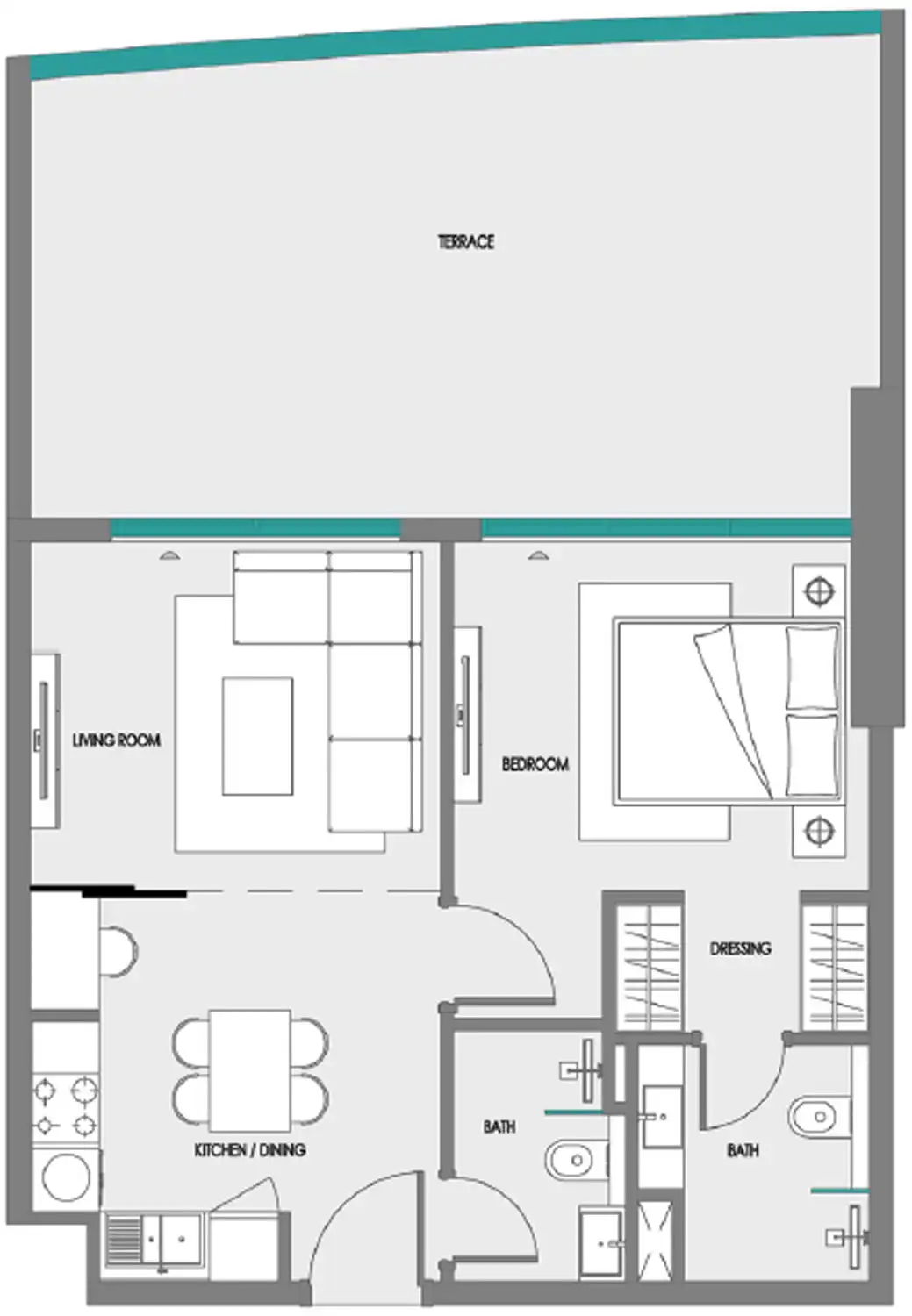
1-Bedroom Apartment
FROM AED 900,000 ($245,100)
Total Area: 570 sqft (53 m²)
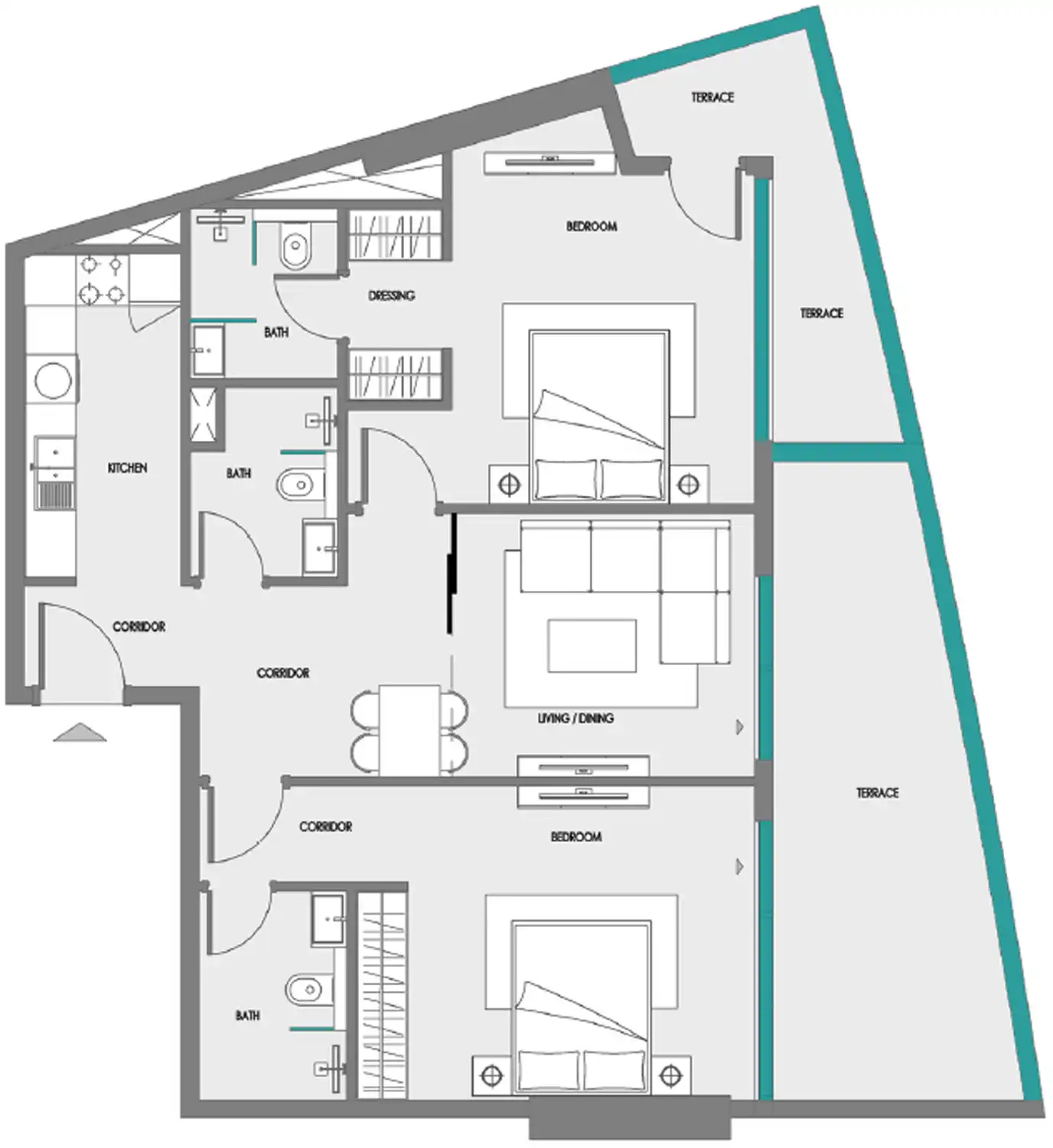
2-Bedroom Apartment
FROM AED 1,300,000 ($354,000)
Total Area: 950 sqft (88 m²)
80 Months Post-Handover
20/80 Payment Plan

80 Months Post-Handover
20/80 Payment Plan






Become The UAE Visa Holder
for Property Investment
in Dubai
We can help you find flexible visa options
that encourage long-term investment

FIND OUT HOW TO GET THE UAE VISA


Property Location
is Warsan
The surrounding district reinforces the project’s practical appeal. Al Warsan is recognised as a more affordable, straightforward residential area that attracts families, students, and professionals connected to nearby education hubs. It offers strong retail and community infrastructure and is shaped more by function than image. For residents, this creates a clear balance between cost, space, and convenience.
Nearby destinations further improve the area’s usability. Dragon Mart serves both as a major retail hub and as one of the district’s defining features. Academic City and Dubai Silicon Oasis contribute education and employment demand, while attractions such as Dubai Safari Park, Mushrif Park, Global Village, IMG Worlds of Adventure, and Ras Al Khor Wildlife Sanctuary add recreational variety. Together, these elements support a well-rounded residential environment without positioning the area as a leisure-led destination.
Connectivity is another important advantage. The district is well linked through Sheikh Mohammed Bin Zayed Road and Al Awir Road, while the future Dubai Metro Blue Line is expected to add a longer-term transport dimension. Typical travel times include 10 minutes to Dubai Safari Park, 12 minutes to Academic City, 15 minutes to IMG Worlds of Adventure, 18 minutes to Dubai International Airport, 20 minutes to Global Village, 22 minutes to Mushrif Park, 20–25 minutes to Downtown Dubai, 25–35 minutes to Dubai Marina and Palm Jumeirah, 10–15 minutes to Expo City Dubai, and 35–40 minutes to Al Maktoum International Airport. Although the location is not central, it is highly functional within Dubai’s wider residential network.
Distance from Samana Greenfield to Key Locations in Dubai


10 MINUTES
20 MINUTES
10 MINUTES
15 MINUTES
20 MINUTES

Why Invest in Real Estate
at Warsan?
From an investment perspective, Samana Greenfield follows conventional market logic. It is positioned to attract tenants seeking proximity to work, education, retail, and transport links rather than beachfront, lifestyle-driven housing. This often supports a more stable tenant base because demand is linked to everyday needs. In addition, as a standard apartment product from an established developer, the project may offer broader liquidity than more specialised property types.
At the same time, a measured view remains necessary. Some details, including pricing for study units and certain cost components, remain unclear. What can be assessed with confidence is that the project benefits from solid location fundamentals, adaptable layouts, and a well-rounded amenity offering, while future transport improvements may strengthen its long-term appeal. These are supportive factors, but they are not a substitute for detailed financial analysis.
Overall, Samana Greenfield presents a cohesive and practical residential proposition within Al Warsan. It combines flexible apartment design, family-oriented amenities, and a location suited to everyday living in Dubai. Rather than attempting to mirror luxury developments in prime districts, it is better understood as a contemporary apartment project defined by usability, accessibility, and long-term practicality, qualities that align with both end-user demand and steady rental demand.


Get The Brochure on WhatsApp 
Get The Brochure
on WhatsApp





Frequently Asked Questions About
Samana Greenfield
Frequently Asked Questions About Samana Greenfield
Where is Samana Greenfield located?
Samana Greenfield by Samana Developers is located in Al Warsan / Dubai International City 2, Dubai, UAE.
What property types are available at Samana Greenfield?
Samana Greenfield offers apartments with 1-bedroom, 1-bedroom + study, 2-bedroom, and 2-bedroom + study layouts.
What are the prices at Samana Greenfield?
Prices start from AED 900,000 ($245,100) for a 1-bedroom at 570 sqft / 53 m² and AED 1,300,000 ($354,000) for a 2-bedroom at 950 sqft / 88.3 m².
What is the payment plan for Samana Greenfield?
The PDC plan is 5% on booking, 5% within 1 month, 5% on the 4th month, then 1% monthly for 85 months. The non-PDC plan is 5% on booking, 10% within 1 month, 5% on the 4th month, then 1% monthly for 80 months.
When is handover expected for Samana Greenfield?
Handover for Samana Greenfield is scheduled for Q1 2029.
What amenities are available at Samana Greenfield?
Amenities at Samana Greenfield include an adult pool, jacuzzi, kids’ pool, BBQ area, sunken seating, pool deck, outdoor cinema, outdoor gym, indoor gym, kids play area, day care centre, and a multi-purpose room.


Hi, I'm Victoria 
Hi, I'm Victoria
Property Investment Expert at in.ae
Your Property Investment Expert at in.ae
If You Have Any Questions About Real Estate in The UAE, I'd Be Happy to Answer 


FROM AED 888,000 ($241,800)




FROM AED 4,500,000 ($1,225,300)
 UAE GOLDEN VISA

FROM AED 2,850,000 ($776,000)
UAE GOLDEN VISA


FROM AED 3,100,000 ($844,100)
UAE GOLDEN VISA


FROM AED 3,990,000 ($1,086,500)
UAE GOLDEN VISA

FROM AED 1,100,000 ($299,500)

FROM AED 1,460,000 ($397,500)


FROM AED 1,500,000 ($408,500)

FROM AED 700,000 ($190,600)

FROM AED 666,000 ($181,300)

FROM AED 666,000 ($181,400)






 23/11/2025








1
Be The First to Know
About New UAE Properties
1
Let's subscribe to the in.ae digest to get access to property pre-launches in Dubai, Abu Dhabi, Ras Al Khaimah, Sharjah, Ajman and Umm Al Quwain. Zero spam.

UAE, Dubai, Palm Jumeirah,
Golden Mile Eight, Office 12

UAE, Dubai, Palm Jumeirah, Golden Mile Eight, Office 12
The Special Project of