
Peace Avenue by Peace Homes enters the market in a format that is easy to define: a mid-rise residential development with a strongly investor-focused unit mix, a substantial internal amenity offering, and a location in Jebel Ali shaped more by connectivity, infrastructure, and the broader west Dubai corridor than by prime-core branding. This gives the project a clear identity from the outset. It is positioned for buyers seeking a residential address connected to Dubai’s wider economic landscape, without reducing the scheme to a purely utilitarian proposition.
This distinction is important because Jebel Ali is still understood primarily through its association with logistics and industry, while the area’s residential appeal is more often judged on access, commuting efficiency, and long-term corridor growth. Peace Avenue aligns with that model.
The building is planned with 2 basement levels, a retail and ground floor, 3 podium levels, 14 residential floors, and a rooftop level. Within that structure, Peace Homes has configured 259 residential units, including 173 studios, 70 one-bedroom apartments, 12 two-bedroom apartments, and 4 three-bedroom penthouses. In addition, 7 shell-and-core retail units are planned at ground level, reinforcing the mixed-use nature of the frontage. In practical terms, the building is weighted towards compact units while still providing a limited premium offering at the top end.
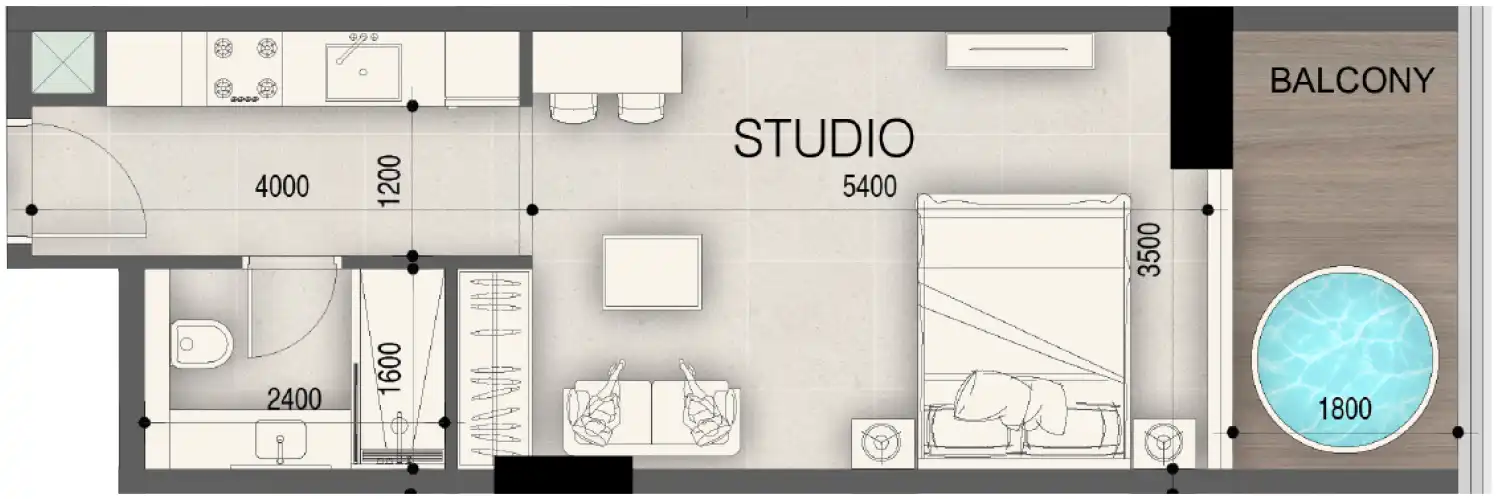
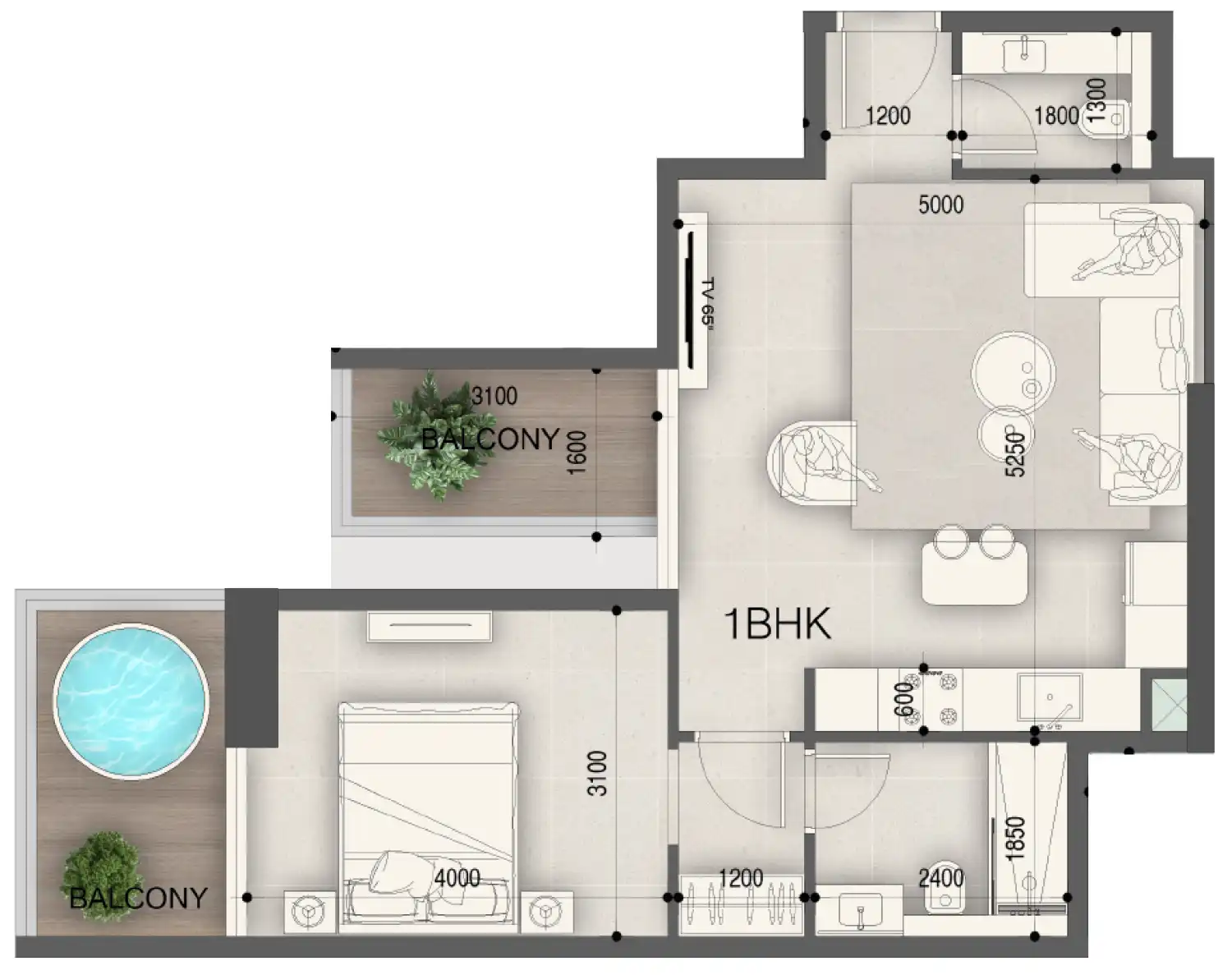
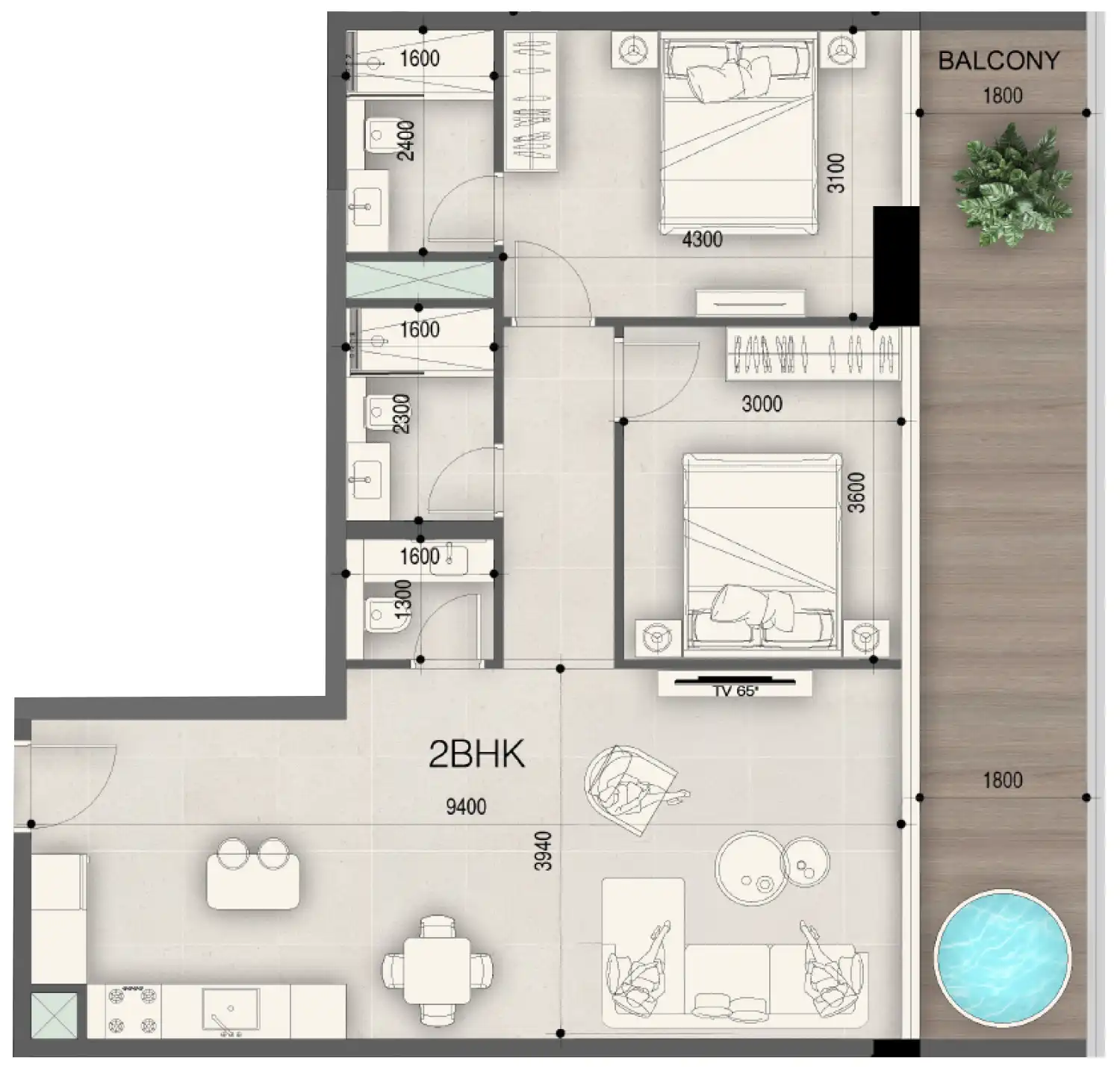
The pricing and size structure supports this approach. Studios are priced from AED 695,000 (≈ $189,200) and range from 401 sqft / 37.3 m² to 623 sqft / 57.9 m². One-bedroom apartments range from 737 sqft / 68.5 m² to 1,361 sqft / 126.4 m², while two-bedroom apartments are listed at 1,078 sqft / 100.1 m². Three-bedroom penthouses range from 2,409 sqft / 223.8 m² to 2,633 sqft / 244.6 m², with prices available upon request. Handover is scheduled for Q2 2028, and the payment plan is structured as 20% down payment, 40% during construction, and 40% upon handover. Together, these elements create a clear product ladder, moving from relatively accessible compact homes to larger-format residences without losing coherence at project level.
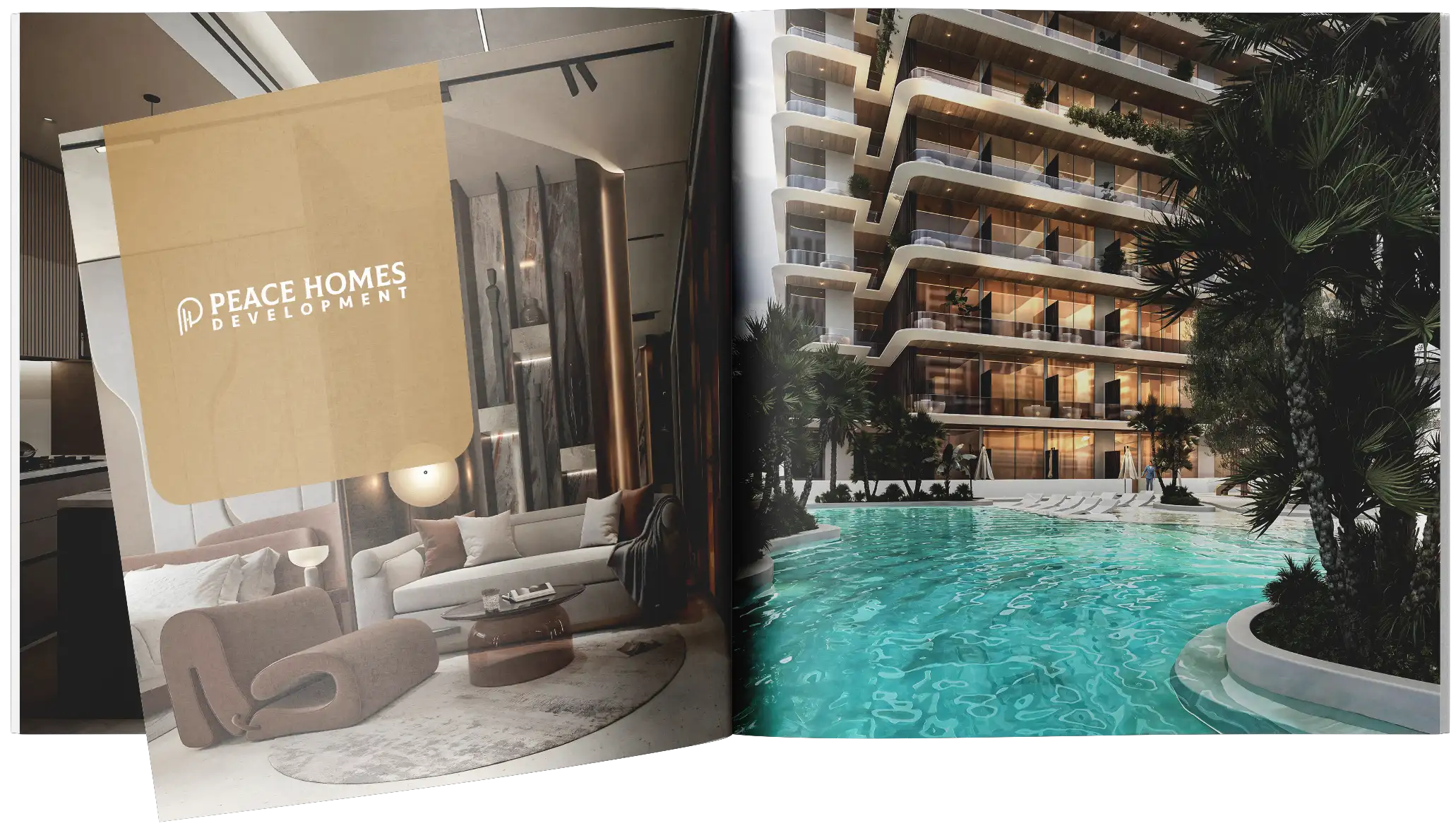
The design language is expressed more through lifestyle than through technical or functional product claims. Peace Avenue is positioned as a contemporary residential address with a broad amenity environment and differentiated private-use features, including jacuzzis in the smaller unit types and private pools in the penthouses. This gives the project greater distinction than a standard apartment building and indicates that Peace Homes is emphasising residential quality through experience and private leisure rather than scale alone. Service charges and related fee structures are not part of the visible positioning, so the emphasis remains on product format, accessibility, and day-to-day usability.
The amenity offering is best understood from a functional perspective. On the active side, the project includes a gym, aerobics room, jogging track, swimming pool, kids pool, Jacuzzi, and mini golf. This creates a varied leisure and fitness environment rather than relying on a single amenity such as a clubhouse. That matters because residents in strategically located but less walkable districts often place greater value on internal leisure infrastructure than those living in denser central areas.
A second layer of amenities relates to family and social use. The kids play area, open cinema, lounge beds, barbecue area, mocktail bar, dining options, and shaded pavilion create a more social environment and broaden the project’s appeal beyond pure investment logic. A third layer relates to daily productivity and convenience. The business lounge, community room, library, 24-hour security, and ground-level retail support remote working patterns and everyday needs. Taken together, these elements create a more self-contained residential setting, which is a meaningful advantage in a corridor location.



Studios & 1-3 Bedroom
Apartments for Sale
at Jebel Ali, Dubai
Peace Avenue by Peace Homes is a residential project in Jebel Ali on Sheikh Zayed Road. The development includes studios, 1 and 2-bedroom apartments, and 3-bedroom penthouses, with pools, fitness spaces, kids facilities, cinema, library, and ground-floor retail.
60/40
Payment Plan
Q2 2028
Handover
AED 695,000
Starting Price
Peace Avenue by Peace Homes in Dubai
Location in Dubai

Developer
Property Type
Available Units
Total Areas
Payment Plan
Completion
Photo Gallery
Renders may look slightly different than real life photos
Renders may look slightly different than real life photos
Floor Plans of Peace Avenue
Studio
1-Bedroom
2-Bedroom
3-Bedroom
Studio Apartment
FROM AED 695,000 ($189,200)
Total Area: 401 sqft (37 m²)
1-Bedroom Apartment
Total Area: 737 sqft (68 m²)
2-Bedroom Apartment
Total Area: 1078 sqft (100 m²)
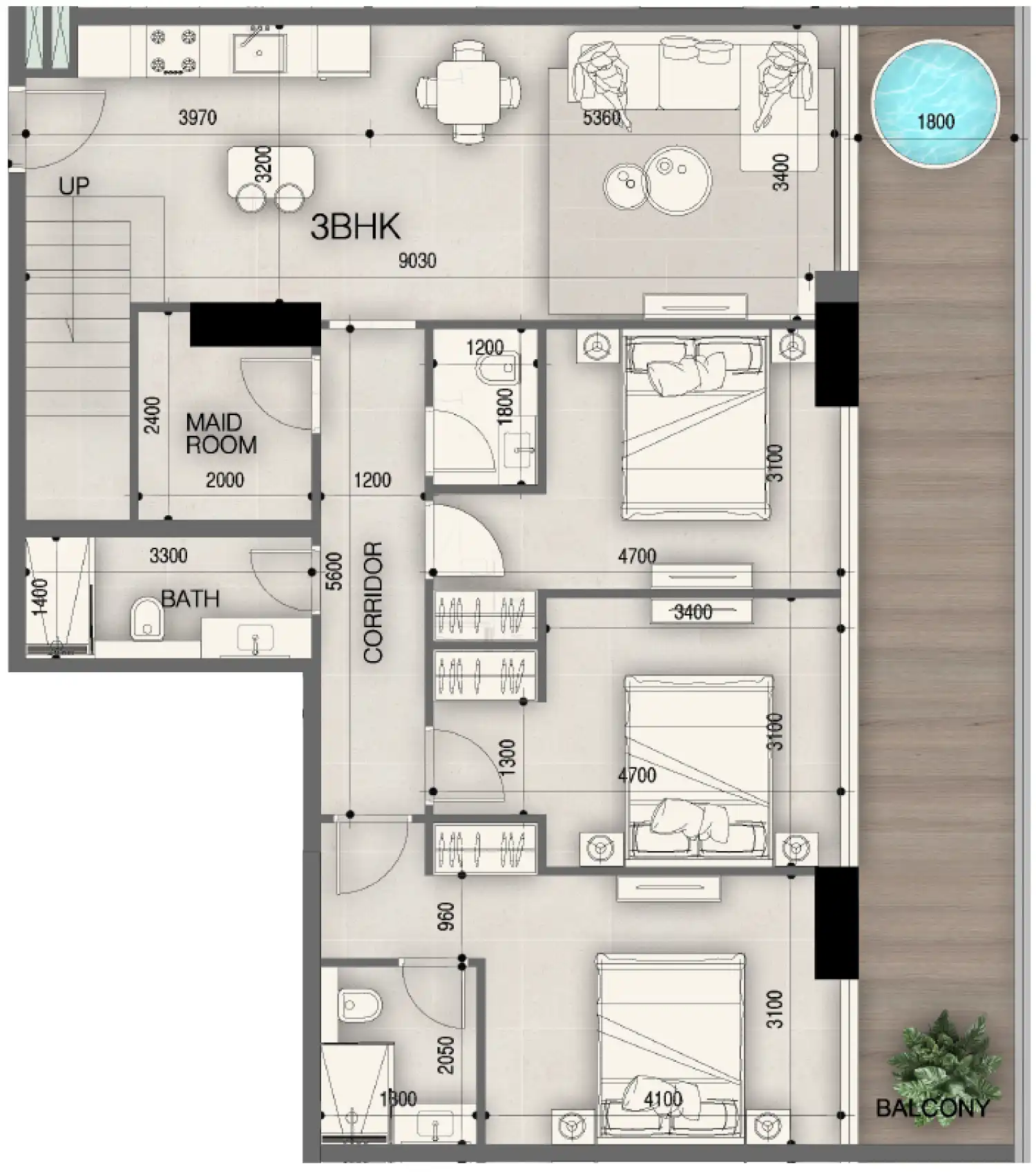
3-Bedroom Penthouse
Total Area: 2409 sqft (223 m²)
Invest with Attractive
60/40 Payment Plan

Invest with Free-Interest
60/40 Payment Plan





Become The UAE Visa Holder
for Property Investment
in Dubai
We can help you find flexible visa options
that encourage long-term investment

FIND OUT HOW TO GET THE UAE VISA

Property Location
is Downtown Jebel Ali
Jebel Ali provides the broader urban context for that self-contained model. The district is one of Dubai’s key strategic zones, closely associated with JAFZA, Jebel Ali Port, large-scale transport infrastructure, and westward urban growth. This gives it scale, reach, and relevance for people whose work or investment rationale is connected to logistics, aviation, trade, transport infrastructure, warehousing, and industrial services. It does not read like a lifestyle-led district in the same way as a central urban area or an established residential precinct. Its appeal is more operational in nature.
That operational profile is reinforced by clear connectivity. Peace Avenue is positioned along Sheikh Zayed Road, with additional access to Mohammed Bin Zayed Road and Expo Road. A metro station is also located within a 3-minute walk. According to the project, Jebel Ali Port is 7 minutes away, Palm Jebel Ali and Jebel Ali Beach are 10 minutes away, Dubai Parks & Resorts, Motiongate Dubai, Real Madrid World, and Legoland are 10 minutes away, Expo City is 15 minutes away, Al Maktoum International Airport is 20 minutes away, Downtown Dubai, Dubai Mall, and Burj Khalifa are 30 minutes away, and Dubai International Airport is 35 minutes away. For occupiers, this means the location can function efficiently for both daily commuting and occasional city-wide movement, which remains one of the area’s clearest strengths.
At the same time, the area is no longer defined solely by port and free-zone infrastructure. The nearby presence of Jebel Ali Beach and Palm Jebel Ali introduces a more recreational coastal dimension, while Expo City and Dubai Parks & Resorts strengthen the area’s destination profile. This does not change the fundamental character of Jebel Ali, but it does make the district more versatile than a purely industrial reading might suggest. It also helps explain why a concept such as Peace Avenue can support a broader amenity programme, as the surrounding area is becoming more varied in how it is used, visited, and inhabited.
Distance from Peace Avenue to Key Locations in Dubai


20 MINUTES
35 MINUTES
30 MINUTES
35 MINUTES
15 MINUTES

Why Invest in Real Estate
at Downtown Jebel Ali?
In buyer-profile terms, the project is more likely to appeal to pragmatic owner-occupiers and infrastructure-focused investors than to buyers seeking symbolic centrality. For residents living and working in west Dubai, the site’s transport logic is directly relevant, while investors may focus on demand for compact apartments, metro connectivity, and the long-term evolution of the southwest corridor. The internal lifestyle offering also helps bridge the gap between strategic geography and residential liveability.
The investment case is therefore pragmatic and functional. Peace Avenue benefits from employment-related demand drivers, proximity to airport and port infrastructure, major road accessibility, and a unit mix concentrated in smaller formats that are generally easier to lease and resell. The relatively modest inventory also reduces the risk of the building being perceived as overly large or anonymous, while the internal leisure offering may strengthen its competitiveness within the wider mid-market segment.
Overall, Peace Avenue by Peace Homes is a coherent residential proposition for buyer-occupiers and investors who understand the relevance of Jebel Ali on its own terms. It offers a compact yet scalable unit mix, extensive internal amenities, and a strategically connected location linked to Sheikh Zayed Road, the Dubai metro, Expo City, Jebel Ali Port, and the emerging leisure profile of Dubai’s western corridor. As such, the project stands out less through visibility than through relevance to its location and its long-term urban context.


Get The Brochure on WhatsApp 
Get The Brochure
on WhatsApp





Frequently Asked Questions About
Peace Avenue
Frequently Asked Questions About Peace Avenue
Where is Peace Avenue by Peace Homes located?
Peace Avenue by Peace Homes is located in Downtown Jebel Ali, Dubai, UAE, along Sheikh Zayed Road (E11). The project also has a metro station at approximately 3 minutes walking distance.
What property types are available at Peace Avenue?
Peace Avenue offers studios, 1-bedroom apartments, 2-bedroom apartments, and 3-bedroom penthouses.
What are the prices of apartments at Peace Avenue?
The starting price at Peace Avenue is AED 695,000 ($189,200) for a studio. Prices for 1-bedroom and 2-bedroom units are not disclosed, and 3-bedroom penthouses are available on request.
What is the payment plan for Peace Avenue?
Peace Avenue has a 20% down payment, 40% construction-linked payment, and 40% upon handover.
When is handover expected for Peace Avenue?
Handover of Peace Avenue is expected in Q2 2028.
What amenities are available at Peace Avenue?
Amenities at Peace Avenue include a swimming pool, kids pool, jacuzzi, gym, aerobic studio, jogging track, mini golf, kids play area, open cinema, outdoor lounge beds, mocktail bar, dining outlets, barbecue station, business lounge, community room, library, multipurpose sports area, shaded pavilion, and 24-hour security.


Hi, I'm Victoria 
Hi, I'm Victoria
Property Investment Expert at in.ae
Your Property Investment Expert at in.ae
If You Have Any Questions About Real Estate in The UAE, I'd Be Happy to Answer 


FROM AED 888,000 ($241,800)



FROM AED 4,500,000 ($1,225,300)
 UAE GOLDEN VISA

FROM AED 2,850,000 ($776,000)
UAE GOLDEN VISA


FROM AED 3,100,000 ($844,100)
UAE GOLDEN VISA


FROM AED 3,990,000 ($1,086,500)
UAE GOLDEN VISA

FROM AED 1,100,000 ($299,500)

FROM AED 1,460,000 ($397,500)


FROM AED 1,500,000 ($408,500)

FROM AED 700,000 ($190,600)

FROM AED 666,000 ($181,300)





 23/11/2025







1
Be The First to Know
About New UAE Properties
1
Let's subscribe to the in.ae digest to get access to property pre-launches in Dubai, Abu Dhabi, Ras Al Khaimah, Sharjah, Ajman and Umm Al Quwain. Zero spam.

UAE, Dubai, Palm Jumeirah,
Golden Mile Eight, Office 12

UAE, Dubai, Palm Jumeirah, Golden Mile Eight, Office 12
The Special Project of