
Many residential launches in Dubai compete through a similar visual language of waterfront luxury. Vision Iconic by Binghatti is better understood through location strategy. Set in Nad Al Sheba, it operates within a district more closely associated with privacy, connectivity, and established residential character than with tourism or short-stay demand.
That location is central to the project’s positioning. A branded tower in an inland but well-connected part of Dubai addresses a different buyer mindset from a resort-led apartment scheme. Rather than asking residents to trade accessibility for lifestyle imagery, Vision Iconic by Binghatti is positioned as a premium high-rise address within Mercedes-Benz Places | Binghatti City, in a setting that supports both daily living and status-driven ownership.
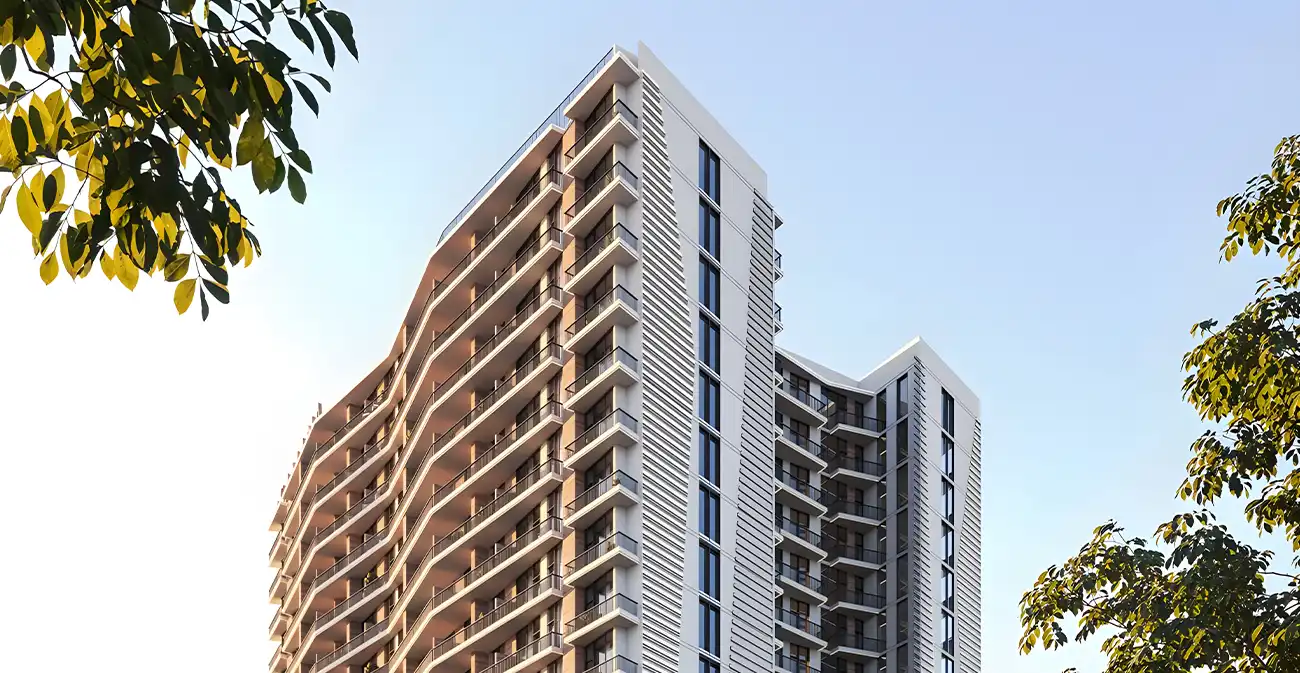
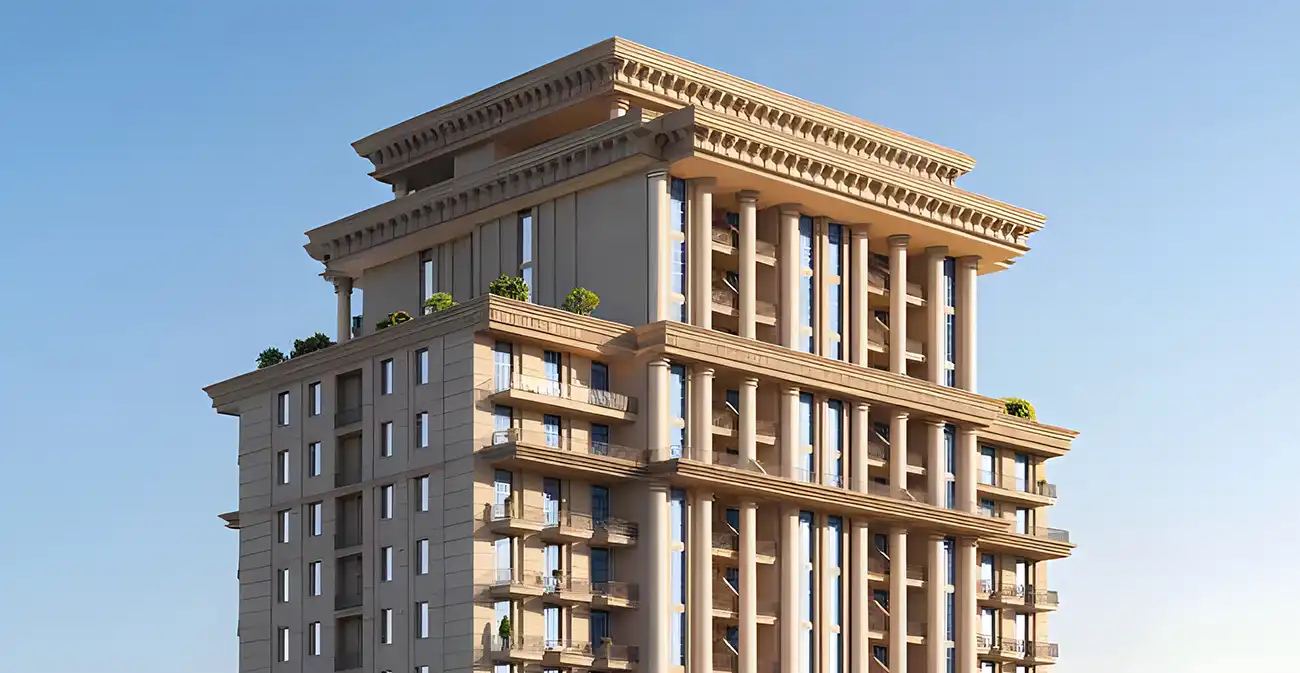
As a development, Vision Iconic by Binghatti is a mixed-use residential and retail tower by Binghatti in Nad Al Sheba, Dubai, UAE. The scheme occupies a plot of 22,282.20 sqm / 239,846 sqft and is configured as Basement + Ground Floor + Mezzanine + 5 Parking Floors + 66 Residential Floors + 9 Mechanical Floors + Roof, with 21 ground-floor retail units.
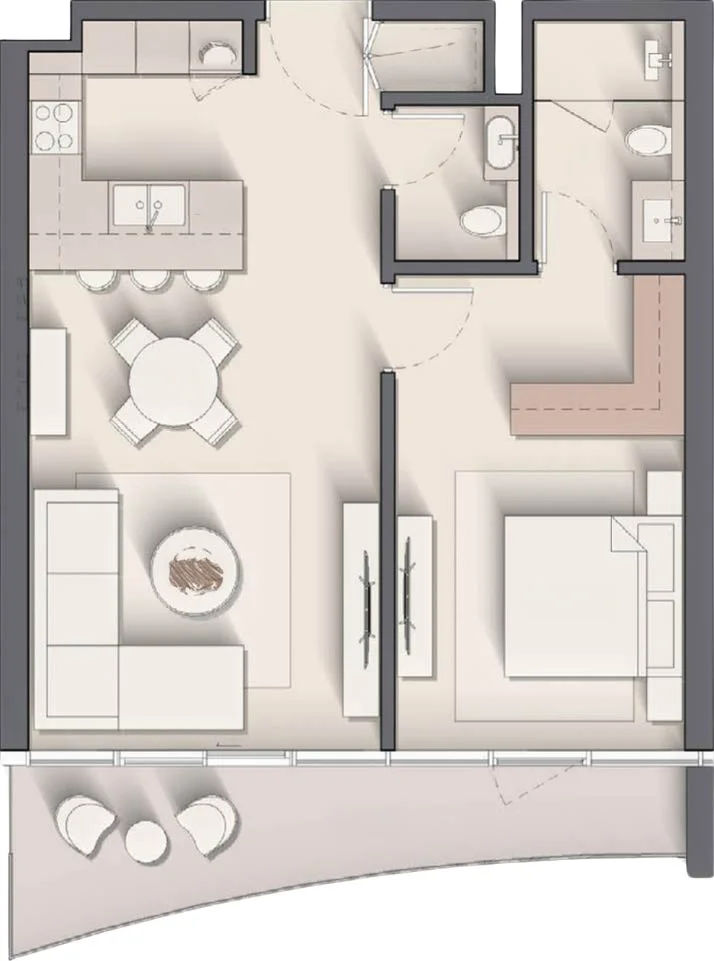
The residential mix begins with 1-bedroom units of 695 sqft / 64 m² from AED 2,600,000 / $707,900, followed by 2-bedroom units of 978 sqft / 90 m² from AED 3,900,000 / $1,061,900 and 3-bedroom units of 1,203 sqft / 111 m² from AED 6,250,000 / $1,701,800.
Larger formats include 4-bedroom units of 2,076 sqft / 192 m² from AED 12,500,000 / $3,403,700 and 5-bedroom units of 3,806 sqft / 353 m² from AED 36,750,000 / $10,006,800. This pricing and size spectrum makes clear that the project is not aimed at a single buyer profile, but spans both premium apartment demand and a more exclusive large-unit segment.
The broader concept supports that reading. Because the tower forms part of Mercedes-Benz Places | Binghatti City, it benefits from a destination context beyond the building itself. In practical terms, this gives the development a stronger sense of place than many standalone towers. It also suggests that the scheme is intended to be experienced through its setting, public realm, and lifestyle infrastructure, not only through the private residences. The result is a more layered proposition: branded residences within a wider community narrative.
The lifestyle component is easier to assess through end-user experience. For health and wellness, the project includes a gym, spa service, yoga and wellness outdoor area, jogging path, sky infinity pool, and podium pool.
Together, these features create a practical daily circuit rather than a simple list of amenities. Residents can move from structured exercise to outdoor activity, lower-intensity wellness, and pool-based downtime without leaving the building environment. In a car-oriented district, that level of internal lifestyle infrastructure carries greater value.
For social use and shared activity, the Grand Promenade appears to be the project’s main organising element. It is supported by food and beverage offerings and entertainment studios, helping the development function as more than a vertical residential stack. This matters because a premium project increasingly needs social space that feels active without becoming chaotic. A well-composed podium and promenade environment can support informal meetings, evening use, and a more socially connected residential experience.
There is also a clear convenience and systems layer. Concierge, valet, smart system, and acoustic system all support the operational side of residential living. Solar photovoltaic technology and LEED certification point to sustainability and building performance as part of the project’s internal identity rather than as an external marketing device.
The inclusion of a private pool component adds another premium dimension and helps the development maintain differentiation across multiple levels of the residential offering.



Luxury Branded Residences
by Mercedes-Benz & Binghatti
at Meydan, Dubai
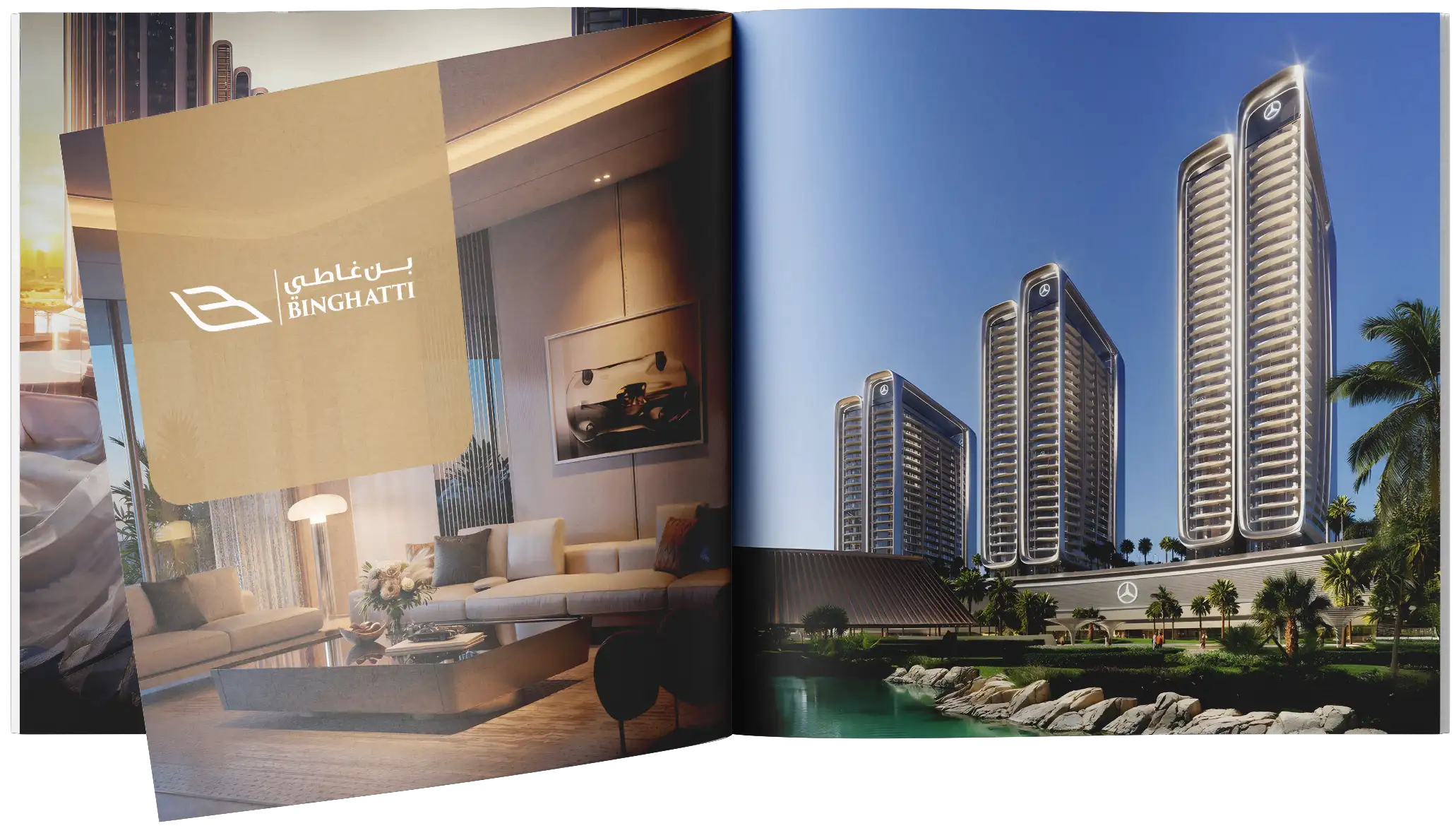
Vision Iconic by Binghatti is a residential and retail tower by Binghatti in Nad Al Sheba, Dubai. Part of Mercedes-Benz Places | Binghatti City. The project includes 1- to 5-bedroom apartments, Grand Promenade, swimming pools, a gym and an outdoor wellness area.
70/30
Payment Plan
Q3 2028
Handover
AED 2,600,000
Starting Price
Binghatti Vision Iconic in Dubai, Meydan
Location in Dubai

Developer
Property Type
Available Units
Total Areas
Payment Plan
Completion
Photo Gallery
Renders may look slightly different than real life photos
Renders may look slightly different than real life photos
Floor Plans of Binghatti Vision Iconic
1-Bedroom
2-Bedroom
3-Bedroom
4-Bedroom
5-Bedroom
1-Bedroom Apartment
FROM AED 2,600,000 ($707,900)
Total Area: 695 sqft (64 m²)
2-Bedroom Apartment
FROM AED 3,900,000 ($1,061,900)
Total Area: 987 sqft (90 m²)
3-Bedroom Apartment
FROM AED 6,250,000 ($1,701,800)
Total Area: 1203 sqft (111 m²)
4-Bedroom Apartment
FROM AED 12,500,000 ($3,403,700)
Total Area: 2076 sqft (192 m²)
5-Bedroom Apartment
FROM AED 36,750,000 ($10,006,800)
Total Area: 3806 sqft (353 m²)
Invest with Attractive
70/30 Payment Plan

Invest with Free-Interest
70/30 Payment Plan






Become The UAE Visa Holder
for Property Investment
in Dubai
We can help you find flexible visa options
that encourage long-term investment

FIND OUT HOW TO GET THE UAE VISA


Property Location
is Meydan
Nad Al Sheba remains one of Dubai’s more practical premium-adjacent districts. The area is widely associated with Meydan and its racecourse setting, and that continues to shape how it is perceived. Compared with districts driven by heavy visitor traffic, Nad Al Sheba feels more residential, more private, and more stable in tone. That is particularly relevant for buyers seeking access to central Dubai without living inside its busiest entertainment corridors. For owner-occupiers and long-term residents, this can be a meaningful advantage.
Connectivity is one of the district’s main strengths. The wider context of Vision Iconic by Binghatti places it within reach of Business Bay, Dubai Mall, Dubai Opera, Dubai Festival City, Palm Jumeirah, Dubai Harbour, Mall of the Emirates, Dubai Hills Mall, Dubai International Airport, Sheikh Zayed Road, Al Ain Road, and Al Khail Road. In practical terms, this is the kind of address that works well for residents who move across different parts of the city for work, school, shopping, or leisure. It is less a self-contained micro-district and more a well-connected residential base linked to several important urban nodes.
The area also benefits from access to established city infrastructure without being overwhelmed by it. Retail reach extends beyond local convenience, while Meydan adds a recognisable lifestyle anchor to the wider setting. Family infrastructure is relevant as well, as Nad Al Sheba is connected to nurseries, schools, clinics, and hospitals within a practical driving radius. This strengthens the area’s case for daily use rather than purely speculative ownership.
This is not a metro-led location. Its appeal is based on road connectivity, privacy, and a greater sense of spatial scale than many tighter urban clusters. That makes it more suitable for residents who accept car-based mobility in exchange for smoother city access and a more controlled residential environment.
Distance from Binghatti Vision Iconic to Key Locations in Dubai


35 MINUTES
15 MINUTES
10 MINUTES
15 MINUTES
20 MINUTES

Why Invest in Real Estate
at Meydan?
At a high level, the economic rationale of Vision Iconic by Binghatti is relatively clear. The project combines a recognisable developer, a branded destination context, a broad residential range, and a location connected to central Dubai demand. That mix can support both resale and rental interest because the scheme is not dependent on a single demographic driver. Some demand may come from professionals seeking a premium non-coastal address, while larger homes may appeal to families looking for stronger internal amenities within a branded setting.
Resale and liquidity are also helped by recognisability. Nad Al Sheba is a well-defined district within the Dubai property market, and Binghatti is a visible developer within the city’s development landscape. That does not remove execution risk or market-cycle risk, but it does improve legibility for future buyers compared with lesser-known locations or unbranded stock.
Overall, Vision Iconic by Binghatti presents a premium residential concept built around controlled luxury, road connectivity, and a district that supports daily life more convincingly than many image-led locations. Its key strength is that it does not replicate Dubai’s coastal prestige model, but instead offers a different version of high-end urban living in Nad Al Sheba, where brand identity and practical access work in the same direction.


Get The Brochure on WhatsApp 
Get The Brochure
on WhatsApp





Frequently Asked Questions About
Binghatti Vision Iconic
Frequently Asked Questions About Binghatti Vision Iconic
Where is Vision Iconic by Binghatti located?
Vision Iconic by Binghatti is located in Nad Al Sheba, Dubai, UAE, within Mercedes-Benz Places | Binghatti City.
What property types are available at Vision Iconic by Binghatti?
Vision Iconic by Binghatti is a residential and retail tower with 1-bedroom, 2-bedroom, 3-bedroom, 4-bedroom, and 5-bedroom residences.
What is the price range at Vision Iconic by Binghatti?
Prices at Vision Iconic by Binghatti start from AED 2,600,000 ($707,900) for a 1-bedroom residence and reach AED 36,750,000 ($10,006,800) for a 5-bedroom residence.
What is the payment plan for Vision Iconic by Binghatti?
Vision Iconic by Binghatti offers a payment plan of 20% on booking, 50% during construction, and 30% upon handover.
When is handover expected for Vision Iconic by Binghatti?
Handover for Vision Iconic by Binghatti is expected in Q3 2028.
What amenities does Vision Iconic by Binghatti include?
Amenities at Vision Iconic by Binghatti include Grand Promenade, a sky infinity pool, podium pool, private pool, gym, spa service, yoga and wellness outdoor area, skyline jogging path, concierge service, valet service, smart system, acoustic system, solar photovoltaic technology, and LEED certification.


Hi, I'm Victoria 
Hi, I'm Victoria
Property Investment Expert at in.ae
Your Property Investment Expert at in.ae
If You Have Any Questions About Real Estate in The UAE, I'd Be Happy to Answer 


FROM AED 2,300,000 ($626,300)
 UAE GOLDEN VISA


FROM AED 1,403,400 ($382,100)
FROM AED 28,672,000 ($7,807,200)
UAE GOLDEN VISA
FROM AED 2,800,000 ($762,400)
UAE GOLDEN VISA
FROM AED 750,000 ($204,200)
FROM AED 1,100,000 ($299,500)
FROM AED 2,610,000 ($710,700)
UAE GOLDEN VISA

 23/11/2025










1
Be The First to Know
About New UAE Properties
1
Let's subscribe to the in.ae digest to get access to property pre-launches in Dubai, Abu Dhabi, Ras Al Khaimah, Sharjah, Ajman and Umm Al Quwain. Zero spam.

UAE, Dubai, Palm Jumeirah,
Golden Mile Eight, Office 12

UAE, Dubai, Palm Jumeirah, Golden Mile Eight, Office 12
The Special Project of